Fields in an enrichment run

A single enrichment run can produce content across four field families. This page lists each field and explains what it’s for, so you can decide what to include in your config.

You don’t have to generate everything. Your generation config determines which fields a run produces, and since usage counts every item you send, generating only the fields you’ll actually use is the point.
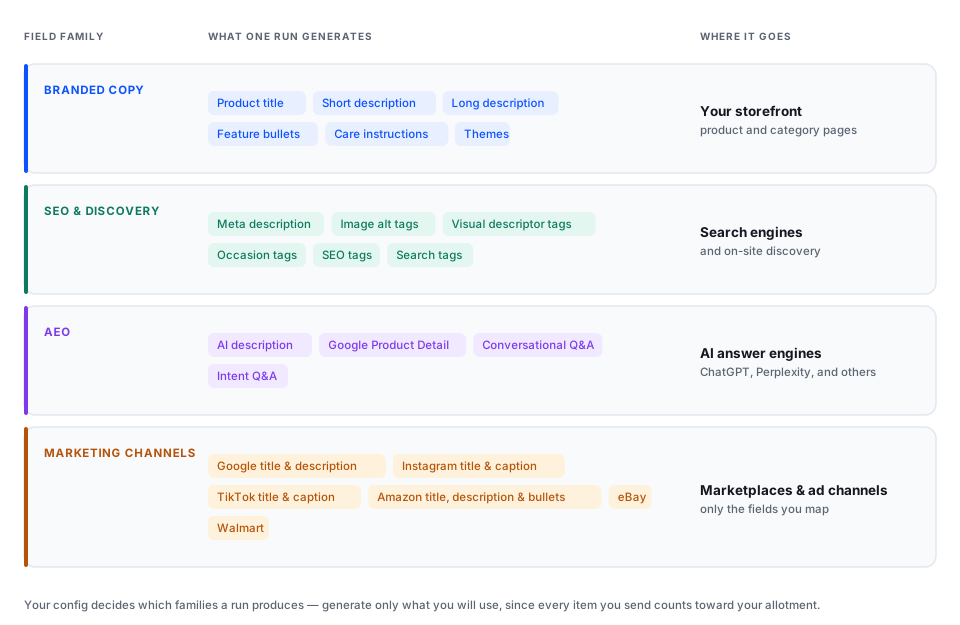
Diagram of the four field families and their destinations: branded copy to your storefront, SEO and discovery metadata to search engines and on-site discovery, AEO content to AI answer engines, and marketing channel fields to marketplaces and ad channels.
One run, four field families, four destinations. Your config decides which of them a run actually produces.

Branded copy

The language that sells the product. This is the core of enrichment and where most merchants start.

FieldWhat it isWhat it’s for
Product TitleThe primary product nameThe highest-impact field you can enrich. Drives click-through everywhere the product appears, and doubles as the SEO page title
Short DescriptionA concise one- or two-sentence summaryCategory pages, collection grids, listing previews — anywhere space is tight
Long DescriptionThe full product storyThe product detail page. Where features become benefits and the brand voice does the most work
Feature BulletsA scannable list of capabilities and benefitsShoppers who skim rather than read, and channels that require a bulleted format
Care InstructionsHow to maintain or care for the productReduces returns and support contacts on apparel, textiles, and finished goods
ThemesThematic descriptors for the productMerchandising, grouping, and collection building

SEO and discovery metadata

Content aimed at search engines and on-site discovery rather than at the shopper directly.

FieldWhat it isWhat it’s for
Meta DescriptionThe snippet shown under your page title in search resultsClick-through from organic search. Doesn’t affect ranking directly, but strongly affects whether a ranked result gets clicked
Alt TagsAccessible text descriptions of product imagesScreen-reader accessibility first, image search second. Best practice is to stay under roughly 125 characters, skip “image of” prefixes, and leave marketing adjectives out
Visual Descriptor TagsDescriptors of what is actually visible in the imageryVisual and filtered search, and giving answer engines something concrete about appearance
Occasion TagsWhen and why someone would use or buy the productGifting, seasonal, and activity-based discovery
SEO TagsKeyword sets associated with the productOn-site search relevance and internal discovery
Search TagsSearch terms and synonyms shoppers actually useCatching the vocabulary your product copy doesn’t use naturally
Where SEO output goes — and doesn't

Page titles and meta descriptions are where SEO enrichment earns its keep, so that’s where the emphasis sits. Tag fields are not written into a meta keywords tag — search engines have ignored those for well over a decade, and spending enrichment on them would be waste.

AEO — answer engine optimization

Content structured so AI assistants and answer engines can understand and cite your products. This is the newest family and the reason enrichment matters beyond traditional search.

FieldWhat it isWhat it’s for
AI DescriptionA compact, factual, citable product summaryGiving answer engines a clean passage to quote when a shopper asks about your product
Google Product DetailStructured specification entries, each a section, attribute, and valueGoogle’s structured product detail surfaces, and any consumer of specification data
Conversational Q&AQuestion-and-answer pairs in natural languageVoice and chat surfaces, where the shopper asks a question rather than typing keywords
Intent Q&AQ&A aimed at purchase-intent questionsThe “will this work for me?” questions that decide a sale — sizing, compatibility, use cases

Marketing channel fields

Copy shaped to each destination’s conventions and constraints. This is FDX Enrichment’s breadth advantage: one run, content formatted for every channel your feed reaches.

FieldWhat it isWhat it’s for
Google Title / Google DescriptionFeed copy shaped to Shopping requirementsGoogle Shopping and Performance Max feeds
Instagram Title / Instagram CaptionSocial-native copy for Meta surfacesInstagram and Facebook catalog listings
TikTok Title / TikTok CaptionShort-form social copyTikTok Shop catalog listings
Amazon Title, Amazon Description, Amazon Feature BulletsCopy matching Amazon’s listing conventionsAmazon marketplace listings, where format compliance affects visibility

Additional marketplace channels including eBay and Walmart are available in the FDX field set.

What appears alongside the generated content

Every enriched product also carries context so you can review it. These aren’t generated — they’re what makes the review possible.

  • Original product data — your source values, kept beside the enriched output so you can always compare.
  • Product identity — product name, ID or SKU, and brand.
  • Product images — the imagery available for the product, which also informs generation and evaluation.
  • Enrichment name and date — which run produced this content.
  • Approval status — where the product stands: pending review, accepted, rejected, or edited.

Not included today: attribution

Enrichment generates language. It does not perform attribution — inferring structured attribute values like gender, color, size, or material, or assigning products to a taxonomy category.

Those fields exist in the broader field catalog and they matter, but they belong to a different job with a different standard: copy is judged on quality, while a structured attribute value is either exactly right or it breaks your filters and channel compliance. Attribution is not part of data enrichment today — it is on the roadmap.

What that means in practice right now: if your source data doesn’t state a material, enrichment won’t infer one, and it won’t write copy claiming one. See What makes good source data for how to close those gaps in the meantime.

Choosing your fields

A few patterns that work:

  • Storefront-first — branded copy plus meta descriptions and alt tags. The fastest visible win on your own site.
  • Ads-first — product titles plus the channel fields for the destinations you actually spend on.
  • AEO-first — AI description, conversational Q&A, and intent Q&A, aimed at the surfaces that are growing fastest.
  • Everything — appropriate once a config has proven itself, and the reason the breadth exists.

Where each of these lands in your feeds is covered in Where enriched fields go.